

If you are a homeowner in the Portland Metro area, SW Washington, or Clackamas County, you have likely noticed a painful trend over the last few years: your utility bills are skyrocketing. With providers like PGE, Pacific Power, and Clark Public Utilities consistently raising rates, the pursuit of Energy Independence has never been more urgent.
Because of this, the most common questions our team hears at kitchen tables across the Pacific Northwest are simple and direct: “How much are solar panels in Oregon?” and “How much does solar installation cost in Portland Oregon?”
Unfortunately, if you ask an out-of-state “solar bro” or a high-pressure sales call center, you will rarely get a straight answer. They want to hide the true cost behind confusing financing terms, unrealistic “free solar” myths, and outdated tax credit information.
At Energy Solutions, we do things differently. As a premier licensed electrical contractor founded right here in 2013, we believe in radical transparency. We utilize our in-house licensed electricians and installers to build comprehensive energy ecosystems, not just slap panels on a roof.
Let’s strip away the sales jargon and look at the exact numbers, variables, and 2026 tax realities that determine how much does solar cost in Oregon today.
The Short Answer: The Price Per Watt in 2026
In the solar industry, we don’t price systems by the number of panels; we price them by the amount of power they can generate, measured in watts.
For a high-quality, professionally installed residential solar system in the Portland Metro area in 2026, you should expect to pay between $3.00 and $4.50 per watt before any incentives or battery additions.
What does that look like for a real home?
- The “average” suburban home in Oregon or SW Washington typically requires an 8-kilowatt (8kW) system (roughly 20 modern, high-efficiency panels).
- 8kW is equal to 8,000 watts.
- At an average of $3.50 per watt, the gross cost of this system would be **$28,000**.
If you receive a quote for $2.00 per watt, you are likely dealing with an unlicensed subcontractor cutting corners. If you receive a quote for $6.00 per watt for standard panels, you are likely being overcharged by a sales organization with massive marketing overhead.

What Drives the Cost? (The 4 Major Variables)
So, why does the price fluctuate between $3.00 and $4.50 per watt? How much do solar panels cost in Oregon for your specific home depends on these four critical variables:
1. System Size and Your Energy Habits
The more power you use, the larger the system you need. If you have an all-electric home with a heat pump, a hot tub, and two Electric Vehicles charging in the driveway, you might need a massive 15kW or 20kW array. While a larger system costs more overall, the price per watt actually goes down due to economies of scale.
2. Roof Complexity and Material
Installing solar on a single-story home with a brand-new, flat, composite shingle roof is straightforward. However, if you have a three-story Victorian in Southeast Portland with a steep 45-degree pitch, multiple dormers, and a concrete tile roof, the labor costs will increase. Our licensed installers require specialized safety equipment and mounting hardware for complex architecture.
3. Equipment Quality (Microinverters vs. String Inverters)
You can absolutely find cheaper quotes, but they usually rely on outdated “string inverters.” In a string system, if a shadow from a 100-foot Douglas Fir falls on one panel, the output of your entire roof drops. We refuse to install cheap technology. We specialize in premium Enphase Microinverters. This technology attaches a tiny, advanced computer to every single panel, ensuring that shading on one side of your roof doesn’t affect the other. It costs slightly more upfront, but it pays for itself by generating significantly more power over 25 years in our tree-heavy PNW environment.
4. The “Ecosystem” Rule & Electrical Upgrades
When you add solar to a house, you are fundamentally altering its high-voltage infrastructure. Many older homes in the Portland Metro have outdated 100-amp electrical panels that simply cannot handle a modern solar backfeed.
- The Ecosystem Rule: We don’t just bolt panels to your roof; we manage the entire ecosystem. If your home requires a main electrical panel upgrade or a Line Side Tap to safely handle the new load, this will add $2,500 to $4,500 to the total project cost. Because we use in-house licensed electricians, this critical upgrade is done seamlessly and safely to code.
The 2026 Tax Credit Reality (What You Need to Know)
When researching solar costs, you must understand the current incentive landscape, as it has changed significantly this year.
In 2026, the famous 30% Federal Investment Tax Credit (ITC) for residential solar-only installations has officially expired. For more details on federal solar tax policies, you can review the U.S. Department of Energy’s solar guide. However, this does not mean the incentives are gone.
For those looking to build true resilience, there is a massive silver lining: The 30% Federal Tax Credit remains fully active for standalone Battery Backup systems and Commercial Solar projects.
- The Battery Strategy: While your solar panels no longer receive the federal break, any Enphase Energy battery system you install does qualify for the 30% dollar-for-dollar tax credit. This heavily subsidizes the most critical part of your home’s disaster preparedness.
- State Rebates: The Oregon Department of Energy (ODOE) also continues to offer localized rebates for solar-plus-storage systems, particularly for homes in high-risk outage areas.
Important Note: While Energy Solutions provides top-tier electrical engineering and installation, we are not tax professionals. Because every homeowner’s financial situation is unique, we strongly advise a final consultation with your certified tax advisor to confirm your exact eligibility for these 2026 credits.

The Grid-Down Caveat: Why Standard Solar is 0% Power
If you are calculating the cost of solar, you must understand what you are actually buying. The most dangerous myth in the industry is that buying solar panels protects you from power outages.
It does not. By law (known as “anti-islanding”), if the neighborhood utility grid fails due to a winter ice storm, a standard grid-tied solar system without a battery must instantly shut off. If it didn’t, your panels would pump lethal high-voltage electricity onto the downed lines while utility workers were trying to repair them. Without specialized equipment, standard solar provides 0% power during a blackout.
The “Sunlight Backup” Exception
Certain Enphase systems offer a “Sunlight Backup” feature. Using an automatic transfer switch, the system disconnects from the dead grid and creates a temporary microgrid powered directly by the sun, without a physical battery.
- The Caveat: It only works while the sun is physically shining. The second a heavy cloud passes over, your power cuts out. When the sun sets, you have 0% power. In a region famous for dark winter storms, this is not a reliable survival strategy.
The Ultimate Solution: Solar + Battery
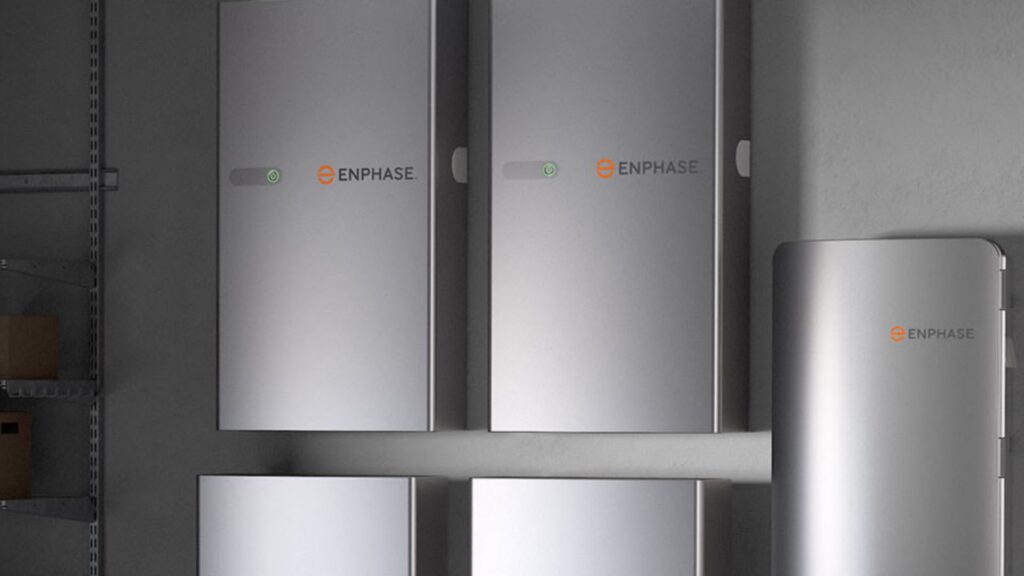
To achieve true, 24/7 resilience, your solar array must be paired with an Enphase Energy battery system. The millisecond the grid collapses, the smart switch isolates your home. Your panels stay awake, powering your critical circuits and recharging your battery during the day, while the battery powers your home seamlessly through the night.
Rethinking ROI: Priceless Backup vs. 0% Power
When evaluating how much solar panels cost in Oregon, homeowners often try to calculate a rigid “Return on Investment” based purely on daily utility savings via Net Energy Metering. While wiping out your summer electric bill is fantastic, in 2026, you must reframe how you calculate ROI.
The true value of a solar and battery system is measured in the catastrophic cost of having 0% power when you desperately need it.
Let’s compare the cost of an emergency backup power system to the visceral reality of a multi-day blackout (like those caused by an ice storm or a Cascadia earthquake):
- The $15,000 Burst Pipe: With 0% power, your furnace blower dies during a winter freeze. Your home drops to 20 degrees, the pipes in your walls burst, and you face massive water damage, contractor delays, and insurance deductibles. With a solar and battery backup, your home stays warm and your plumbing stays intact.
- The $1,500 Grocery Loss: A fully stocked fridge and deep freezer become a toxic biohazard after 48 hours without power. With a battery microgrid, your food stays perfectly preserved indefinitely.
- The Rural Sanitation Crisis: For homes in Clackamas or Clark County relying on a well pump, 0% electricity means zero running water. You cannot flush toilets, take sanitary showers, or provide drinking water for your family. With an off-grid microgrid, your well pump continues to draw fresh water every single day.
- Medical Vulnerability: For families relying on CPAP machines, oxygen concentrators, or refrigerated insulin, having 0% power transforms a power outage into a life-threatening medical emergency. With battery backup, life-saving devices never skip a beat.
When the grid is dead for a week, having emergency backup power is a service that money literally cannot buy from the utility company. The upfront cost of a battery system pays for itself by preventing catastrophic property losses and providing absolute, priceless peace of mind.
Beware the “Solar Bros”: The Roofer Rule
When comparing quotes for solar installation cost in Portland Oregon, you will likely encounter bids that seem “too good to be true.” They almost always are.
Most online solar companies are marketing firms. They sell you a contract and hire out the labor to the cheapest, unlicensed subcontractors they can find. They do not care about the structural integrity of your home.
This is why Energy Solutions rigidly enforces the “Roofer” Rule: Roofers are experts at roofing, not electricians. (And vice versa: solar salesmen are not structural experts).
If your roof is nearing the end of its life, we will honestly advise you to replace it before we install a 30-year power plant on top of it. If you allow an out-of-state company to bolt panels onto 18-year-old shingles, you will inevitably face massive removal and re-installation fees when the roof eventually leaks. Furthermore, we use our own in-house licensed electricians and installers to ensure that every roof penetration is perfectly flashed and every wire meets the strict National Electrical Code (NEC).
The Verdict: Is the Cost Worth It in 2026?
If you are looking for a cheap, corner-cutting home improvement project, solar is not the answer. But if you are looking to:
- Hedge against utility rate hikes that are compounding at 10-15% annually.
- Protect your family from catastrophic property damage during grid failures.
- Power your electric vehicles for a fraction of the cost of the grid.
- Increase the long-term equity and resilience of your property.
…then investing in a professionally designed solar and battery ecosystem is the smartest financial decision you can make for your Pacific Northwest home.
Don’t trust your home’s most sensitive electrical components to an out-of-state sales team, and don’t rely on online calculators to determine your actual costs. Trust the local experts who live and work right here in the Portland Metro.
Get a Free Quote today and let our licensed experts design a customized, transparent energy solution for your family!