

When you first start exploring residential solar for your home in the Portland Metro or the broader Willamette Valley, it can feel like you are trying to learn a foreign language. Between kW, kWh, microinverters, Net Metering, and ITC, the sheer volume of technical jargon is enough to make anyone’s head spin.
But if you are looking at a solar proposal right now, there is one specific acronym you must understand before signing any contracts: TSRF.
If your solar salesperson glossed over this number, or if they couldn’t clearly explain what it means for your specific roof, it is a massive red flag. At Energy Solutions, we believe in radical transparency. As licensed electrical contractors who have completed over 1,050 local projects, we know that true Energy Independence starts with honest mathematics.
Let’s break down the TSRF solar meaning, why it matters so much in the Pacific Northwest, and exactly how it dictates your eligibility for thousands of dollars in cash incentives from our local Oregon utility companies.
What Does TSRF Stand For?
TSRF stands for Total Solar Resource Fraction.
In plain, neighborly English, TSRF is a percentage score (from 0% to 100%) that grades how “perfect” your roof is for generating solar energy. It compares the amount of sunlight your specific roof receives over an entire year to the amount of sunlight a hypothetically “perfect” roof in your exact location would receive, using accurate modeling standards
If your roof has a TSRF of 80%, it means your solar array will produce 80% of the maximum theoretical energy possible for a home in any Portland or Salem zip code.
The Two Halves of the TSRF Calculator
To get your final TSRF score, solar engineers look at two distinct physical factors. TSRF is calculated by multiplying your TOF (Tilt and Orientation Factor) by your Solar Access (Shading).
1. Tilt and Orientation Factor (TOF)
This measures the physical architecture of your house.
- Orientation: Which way does your roof face? In the Northern Hemisphere, “True South” is the 100% perfect orientation. If your roof faces East or West, your score drops slightly. If it faces North, the score drops drastically.
- Tilt: How steep is your roof? In Oregon, the sun sits lower in the southern sky, especially during the winter. A completely flat roof isn’t ideal, nor is a completely vertical wall. The perfect tilt is usually around 30 to 35 degrees (roughly a 7/12 or 8/12 roof pitch).
2. Solar Access (The Shading Factor)
This is the big one in the Pacific Northwest. Solar Access measures how much of the sky is physically blocked from hitting your panels. We live in a region defined by massive, beautiful evergreens. If a 100-foot Douglas Fir, your neighbor’s three-story house, or your own chimney casts a shadow over your roof between 9:00 AM and 3:00 PM, your Solar Access score goes down.
When you combine a roof’s physical angle (TOF) with its shading (Solar Access), you get your Annual TSRF.
What is a “Good” TSRF in Oregon?
When homeowners learn about this metric, their first question is always: “What is a good TSRF?”
Many people assume they need a 100% score for solar to be “worth it.” That is entirely false. In reality, a 100% TSRF is virtually impossible unless you live in the middle of a flat, treeless desert with a custom-built, perfectly south-facing, mathematically angled roof.
Here is how we grade TSRF scores in the real world of NW Oregon:
- 85% to 95% (Excellent): You have a highly optimized, south-facing roof with almost zero shading from trees or nearby structures. Solar is an absolute no-brainer for your property.
- 75% to 84% (Great): You likely have an East or West-facing roof, or you have a South-facing roof with some minor morning or late afternoon shading. This is incredibly common in the Portland Metro, and solar is still a fantastic financial investment here.
- 65% to 74% (Marginal/Fair): Your roof faces East/West and deals with significant shading from nearby trees. Solar can still work and save you money, but the “payback period” will be longer (perhaps 11-13 years instead of 7-9 years). We have to be very careful with the design here.
- Below 65% (Poor): If your score drops below this threshold, an honest contractor will look you in the eye and advise you against installing solar panels on that specific roof plane.
The Oregon Incentive Catch: PGE, Pacific Power, and the 75% Rule
There is a massive, incredibly important reason why your TSRF score is the most critical number on your quote: It determines your eligibility for state and utility incentives. If you live in Oregon and receive your electricity from Portland General Electric (PGE) or Pacific Power, you are likely eligible for substantial cash incentives to help lower the upfront cost of your solar installation. These funds are largely distributed through the Energy Trust of Oregon.
However, the Energy Trust and your utility company will not hand out free money for a poorly designed system that lives in the shade. They require your solar investment to be highly efficient to benefit the overall power grid.
To qualify for solar incentives from the Energy Trust of Oregon, PGE, or Pacific Power, your system must strictly maintain a TSRF of 75% to 80% or higher (the exact percentage can fluctuate slightly depending on specific program tiers and low-income qualifiers, but 75% is the absolute baseline). Additional storage and resilience rebates offered by the Oregon Department of Energy (ODOE) also heavily scrutinize your system’s efficiency.
If an inexperienced installer designs a system on a heavily shaded roof with a 68% TSRF, you will instantly be disqualified from these critical financial incentives, costing you thousands of dollars out of pocket.
Why the “Solar Bros” Hate TSRF
This brings us to the most frustrating part of the modern solar industry. Out-of-state sales teams and aggressive door-to-door marketers absolutely hate talking about TSRF. Why? Because an accurate TSRF score requires honesty, and honesty sometimes ruins a quick sale.
Here is how the “Solar Bros” fake your TSRF score to get your signature: They sit in a call center in another state, pull up a 3-year-old Google Earth satellite image of your house, and use a generic software tool to draw squares on your roof. They ignore the fact that the maple tree in your backyard has grown 15 feet since that photo was taken. They artificially inflate your TSRF score to 85% so their financial “ROI” spreadsheet looks amazing and ensures it appears to qualify for the Energy Trust rebates.
When the system is actually installed, the utility company inspects the real-world shading, realizes the true TSRF is 60%, and denies your rebate check. By then, the sales team is nowhere to be found.
The Energy Solutions Difference: Physical Audits
At Energy Solutions, we are licensed electrical contractors. We don’t guess your TSRF from a call center.
We utilize our in-house licensed electricians and installers to perform rigorous, on-site physical audits. We use advanced tools (like the Solmetric SunEye or drone-assisted Aurora Solar mapping) to measure the exact path of the sun over your specific roof across all 365 days of the year. We factor in every single chimney, dormer, and neighboring tree.
Because we do the hard math upfront, we guarantee that the TSRF on your proposal is the true TSRF. If it qualifies for PGE or Pacific Power incentives, we manage all the paperwork for you to ensure you get your funding.

How Technology Fights a Lower TSRF
What if you really want Energy Independence, but your roof’s TSRF is sitting at a borderline 72% because of an immovable, beautiful oak tree? Does that mean solar is dead for you?
Not necessarily. This is where advanced electrical engineering saves the day.
If you have a lower TSRF due to shading, you absolutely cannot use outdated “string inverters” (where one shaded panel drags down the whole roof). At Energy Solutions, we specialize in premium Enphase Microinverters. Because a microinverter attaches a tiny, independent computer to every single panel, your unshaded panels continue pumping out 100% power even when the oak tree casts a shadow over the corner of the array.
Furthermore, if your roof space is heavily shaded, we can bypass the roof entirely. For homes with acreage in places like Marion County or rural Clackamas County, we can design a Ground Mount System. We sink steel frames directly into the sunniest part of your yard, pointing them True South at the exact perfect tilt, artificially creating a 95%+ TSRF score from scratch to secure your state incentives.
The “Grid-Down” Reality: TSRF and Battery Backup
While having a high TSRF is vital for offsetting your daily utility bill and securing Energy Trust rebates, there is a completely different factor to consider in 2026: Disaster Resilience.
Even if you have a perfect 99% TSRF score, if you only have solar panels, your home will still lose power during a neighborhood blackout. By law (anti-islanding), grid-tied solar systems must shut off during an outage to protect utility workers.
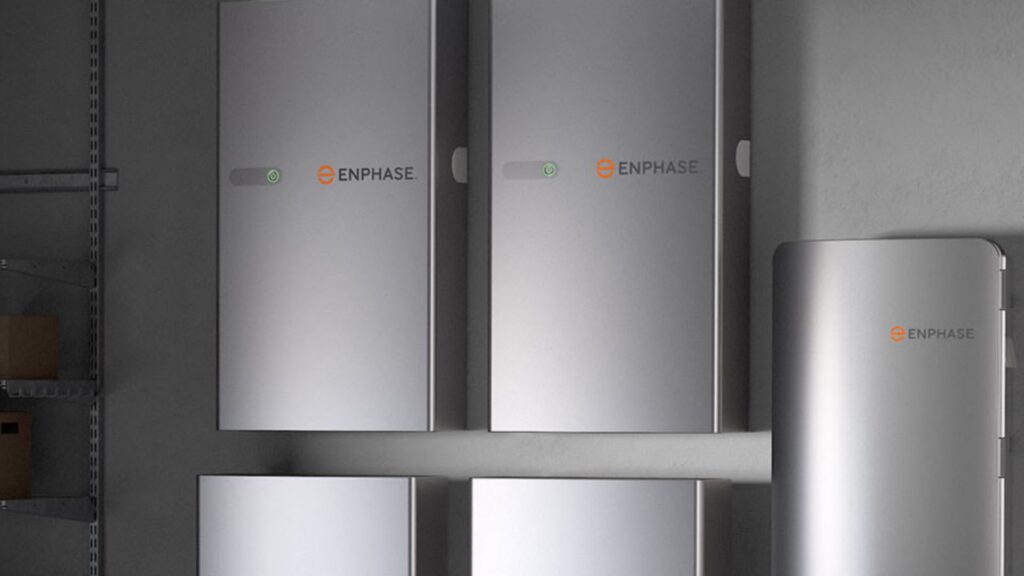
If you want to survive a PNW ice storm or a major seismic event, you must pair your solar array with an Enphase Energy battery system.
When you have a battery, your TSRF score dictates how fast your system can recharge that battery during a multi-day blackout. A custom-engineered system ensures that even during a short, hazy winter day, your panels can capture enough ambient UV light to top off your battery, keeping your critical loads (fridge, well pump, furnace blower) running indefinitely.
The “Roofer” Rule
Before we calculate your TSRF or install a single microinverter, we always check the health of the canvas.
Remember our golden rule: Roofers are experts at roofing, not electricians. If your roof is nearing the end of its lifespan, a high TSRF doesn’t matter—you need to replace the shingles before bolting a 30-year power plant on top of them. If you need a re-roof down the line, we offer a dedicated Solar Support (R&R) service to safely remove and reinstall your array to code. Never let a roofer unbolt your live, high-voltage panels!
Ready to Find Your True Solar Score?
Understanding your true Total Solar Resource Fraction is the only way to make an honest, financially sound decision about residential solar. Don’t rely on generic satellite estimates from out-of-state sales teams, and don’t let anyone pressure you into a system without showing you the hard math regarding your PGE or Pacific Power eligibility.
Trust the local experts who have been powering the Portland Metro since 2013. We will come to your home, perform a rigorous physical site audit, and show you exactly what the sun can do for your specific property.
Get a Free Quote today and let our licensed experts calculate your honest path to Energy Independence!