

If you live in the Portland Metro area, SW Washington, or Clackamas County, you know the joke: we don’t tan, we rust. With our famous nine months of drizzle, overcast skies, and dark winter afternoons, it’s completely natural for homeowners to look at their roof and wonder, “Is putting solar panels up there actually worth it, or am I just buying expensive roof decorations?”
When we sit down at kitchen tables from Vancouver down to Oregon City, the most common system size we quote isn’t a massive, sprawling energy farm, nor is it a tiny DIY starter kit. The “Goldilocks” size for the average suburban Pacific Northwest home is typically 20 panels.
But “20 panels” is just a physical count. What does that actually mean for your daily life, your utility bill, and your ability to keep the lights on? Let’s strip away the sales jargon and look at the real numbers.
The Problem: The “Solar Bros” and Unrealistic Promises
Unfortunately, the solar industry has a transparency problem. National call centers and aggressive door-to-door “solar bros” often show up in Oregon and Washington with production estimates built for Southern California. They overpromise on winter generation, downplay your actual energy usage, and view your home as a quick commission rather than a complex electrical ecosystem. When November hits and your system isn’t producing what the salesperson promised, those out-of-state teams are completely unreachable.
The Solution: Real Local Expertise
At Energy Solutions, we do things differently. As a local electrical contractor founded right here in 2013, we aren’t just a sales team. We rely exclusively on our in-house licensed electricians and installers to manage your entire project—from the initial honest site audit and system design to permitting, installation, and decades of ongoing support. We design systems for our weather, using real data from local utilities.
Here is exactly what you can expect from a 20-panel system in the Pacific Northwest.
The Math: 20 Panels = 8 Kilowatts of Power
First, let’s translate “panels” into “power.”
At Energy Solutions, we don’t install outdated, low-wattage modules. We utilize modern, high-output, premium panels. The current industry standard for residential solar right now is roughly 400 watts per panel.
- 20 Panels × 400 Watts = 8,000 Watts (or 8kW)
In solar terminology, this is an 8kW system. This is the “nameplate rating”—the maximum power the system can generate at any given moment under perfect laboratory conditions. But as we all know, a Tuesday in February in Portland is rarely “lab perfect.”
So, what does an 8kW system actually produce over the course of a year? In the NW Oregon and SW Washington climate, a properly sited, south-facing 8kW system typically generates between 8,000 to 9,000 kWh per year.
Curious about how engineers calculate this based on local weather patterns? You can play with the National Renewable Energy Laboratory’s PVWatts Calculator to see the raw data for yourself.
The Seasonal Swing: Summer Highs vs. Winter Lows
If you moved here from Arizona, you might expect your solar production to look like a steady, flat line on a graph year-round. In the Pacific Northwest, it looks much more like a roller coaster.
Because of our northern latitude, our summer days are incredibly long—we often get usable sunlight until nearly 9:00 PM. Conversely, our winter days are short, low-angled, and famously gray. Here is the realistic breakdown for an 8kW (20-panel) system:
Peak Summer (July & August)
- Daily Production: ~40 to 50 kWh per day
- Monthly Total: ~1,200 to 1,350 kWh
- The Reality: Your utility meter is effectively spinning backward furiously. You are producing far more power than your home can possibly use. Your panels are soaking up 14+ hours of sun, building up a massive “credit bank” with your utility provider (like PGE, Pacific Power, or Clark Public Utilities).
Deep Winter (December & January)
- Daily Production: ~8 to 15 kWh per day
- Monthly Total: ~300 to 400 kWh
- The Reality: It’s raining sideways, and it’s dark by 4:30 PM. Your system is still working—solar panels run on UV light, not heat, so they absolutely generate power through the clouds!—but it is producing a fraction of its summer output.
What Does 8,000 – 9,000 kWh Actually Power?
Is an 8kW system enough for your family? Let’s look at average consumption. According to recent data, the typical Oregon/Washington home consumes about 900 to 950 kWh per month, which works out to roughly 11,000 kWh per year.
This means a 20-panel system will typically offset 80% to 90% of an average local home’s annual electricity usage.
What a 20-Panel System Can Comfortably Run:
- All your LED lights, televisions, and electronics.
- High-draw kitchen appliances (refrigerator, electric oven, microwave).
- Your standard electric water heater and washer/dryer.
- Standard summer air conditioning usage.
When You Might Need More Than 20 Panels:
- Electric Vehicles (EVs): If you commute 15,000 miles a year in a Tesla or a Ford F-150 Lightning, you may need an additional 8 to 10 panels just to cover the car’s charging needs.
- Winter Heating: If your home relies entirely on inefficient electric baseboard heaters, or if you run a heat pump 24/7 during a January freeze, 20 panels won’t get you to a 100% “Net Zero” offset.
The Magic (and the Catch) of Net Energy Metering
You might be looking at those winter production numbers and panicking. “Wait, if my system only makes 300 kWh in December, but I use 1,200 kWh to heat my house, won’t I have a massive winter electric bill?”
This is where Net Energy Metering (NEM) saves the day.
Think of the regional power grid like a giant, invisible battery. In July, when your 20 panels are pumping out 1,300 kWh but you only use 800 kWh, you send that extra 500 kWh of clean energy back into the grid. Your utility company legally must give you a 1-for-1 retail credit for that power.
In December, when you use 1,200 kWh but only produce 300 kWh, you don’t pay out-of-pocket for the difference. You simply “cash in” the credits you banked during the summer. You are paying for your winter heat with the sunshine you banked six months prior. For more details on state rules, see the Oregon Department of Energy’s guide to solar.
The Drawback: When the Grid Goes Down, You Go Down
Net Metering is brilliant financially, but there is a major catch that door-to-door salespeople conveniently “forget” to mention: If you only have solar panels, your power will still go out during a neighborhood blackout.
Why? It’s a matter of safety. If a tree takes out a power line in Lake Oswego or Vancouver, utility workers have to climb those poles to fix them. If your solar panels are still pumping high-voltage electricity backward into the broken grid, it could electrocute the linemen. By law, standard grid-tied solar inverters must instantly shut down the millisecond the grid goes offline.
So, yes: on a brilliantly sunny day after an ice storm, if the grid is down, your 20 panels will sit uselessly on your roof.
The Fix: Energy Independence & Battery Backup
If losing power during our increasingly severe PNW winter storms is a concern, standard solar isn’t enough. You need Energy Independence.
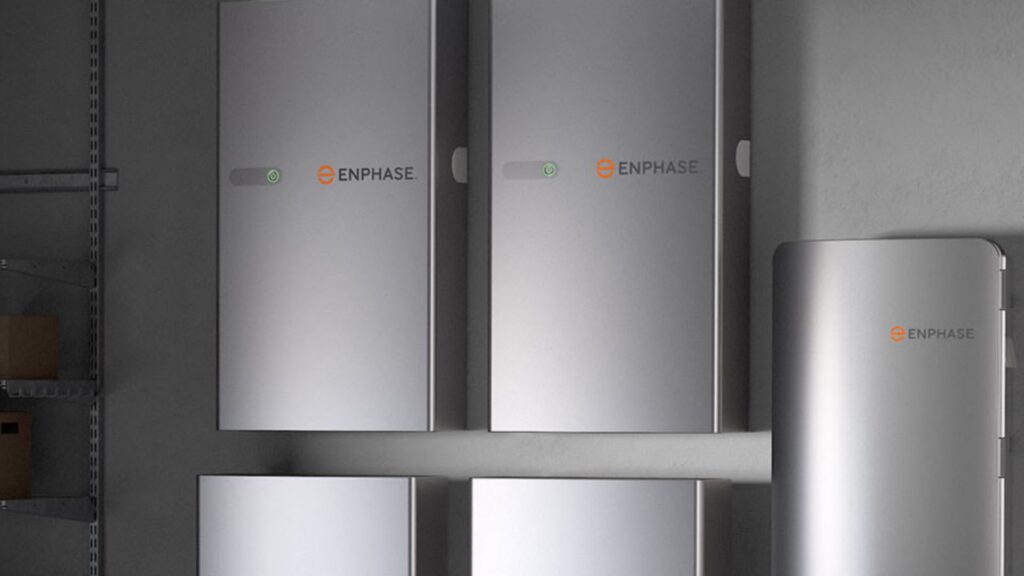
To keep your lights on, your fridge cold, and your well pump running during a blackout, you must decouple from the grid using a Battery Backup system. When the grid fails, the battery’s smart switch instantly islands your home. Your solar panels route power directly into your battery, and your battery powers your home—completely safely, and completely off-grid. (Please note: we specialize in industry-leading Enphase systems; we do not install Tesla Powerwalls).
Transform Your Home with our Signature Packages
Because we are licensed electrical contractors, we don’t just bolt panels to your roof and walk away. We look at your home’s entire electrical ecosystem. Many homeowners choose to bundle services into one of our Signature Packages, saving thousands on labor costs because our in-house licensed electricians and installers can handle everything in a single, streamlined project.
- The EV-Ready Home: We pair your new 20-panel array with a Level 2 EV Charger and a heavy-duty electrical panel upgrade.
- The Resilient Home: We install a high-capacity Generator alongside a manual transfer switch for guaranteed winter power.
- The Full Transformation: The ultimate ecosystem. We integrate Solar + Battery Backup + EV Charger + Smart Panel. You become your own completely independent micro-utility.
A Quick Word on Roof Health
Before we install 20 panels (which weigh roughly 40 lbs each), we have to talk about the surface they sit on. If your roof is nearing the end of its life, we will advise you to replace it first.
If you do need a re-roof down the line, we offer a dedicated Solar Support (R&R) service to safely Remove and Reinstall your array. We will happily coordinate timelines with your roofing contractor to protect your warranty, but always remember the golden rule: roofers are experts at roofing, not electricians. You absolutely need our in-house licensed electricians and installers to safely disconnect your live high-voltage power plant and remount it to current codes once the new shingles are laid. Never let a roofer unbolt your solar!
Frequently Asked Questions
Can I start with 20 panels and add more later?
Absolutely! This is one of the biggest advantages of working with Energy Solutions. We use premium Enphase microinverters. Unlike older systems with a central “string” inverter that has a strict capacity limit, our microinverter systems are completely modular. If you buy an EV next year or install a hot tub, our in-house licensed electricians can easily expand your array (roof space permitting).
Does an 8kW system fit on a standard roof?
Usually, yes. A 20-panel system requires roughly 350 to 400 square feet of clear roof space. If you don’t have a single large south-facing roof plane, we simply split the array. We might put 12 panels facing South and 8 facing West to catch the late afternoon sun. Because each panel operates independently, shade on the West side won’t drag down the production of the South side.
How much money will this save me?
While utility rates vary between PGE, Pacific Power, and Clark Public Utilities, an 8kW system typically saves local homeowners between $1,500 and $1,800 per year immediately. As utility rates continue their historic upward climb, your savings will only compound.
Ready to Find Out Your True Potential?
Is 20 panels the exact right number for your home? We don’t guess, and we don’t use high-pressure tactics. We analyze your past 12 months of energy usage, physically measure your roof, and use advanced software to design a custom ecosystem tailored perfectly to your family’s needs.
Get a Free Quote today and let our local experts design your path to Energy Independence!