

In the world of residential solar energy, a 20-kilowatt (20kW) system is an absolute heavyweight.
Most standard suburban homes in the Portland Metro area—from tight lots in Beaverton to classic craftsman houses in Southeast Portland—install solar systems in the 6kW to 10kW range. If you are researching a 20kW array, you aren’t just looking to offset your lightbulbs and refrigerator. You are making a serious investment in comprehensive energy independence and effectively pre-paying for decades of heavy-duty power.
But before we can talk about the incredible financial savings or battery backups, we have to answer a fundamental physics question: Where are we going to put all that glass?
The Problem: When Salesmen Ignore the Measuring Tape
Unfortunately, the solar industry is plagued by a transparency problem. National call centers and aggressive door-to-door “solar bros” often pull up your house on Google Earth, see a large roof, and immediately try to sell you the biggest system possible. They will eagerly promise a 20kW array without factoring in local fire codes, structural shading from our famous Pacific Northwest evergreens, or the limits of your home’s electrical panel.
When it comes time to install, the plans inevitably get rejected by the county inspector, or the system physically won’t fit on your roof. When that happens, those out-of-state sales teams are suddenly impossible to reach.
The Solution: Real Local Electrical Expertise
At Energy Solutions, we do things differently. As a premier electrical contractor founded right here in 2013, we aren’t just a sales team looking for a quick commission. We rely exclusively on our in-house licensed electricians and installers to manage your entire project ecosystem—from the initial, mathematically sound site audit and system design to permitting, installation, and long-term support.
Let’s strip away the sales jargon and look at the realistic space, power, and grid requirements for a 20kW solar system in NW Oregon and SW Washington.
What Can a 20kW System Actually Power?
Before committing to a system of this size, it’s crucial to understand exactly how much energy it produces. In the Pacific Northwest climate, a well-positioned 20kW solar system will generate roughly 20,000 to 22,500 kilowatt-hours (kWh) per year.
To put that in perspective, the average local home uses about 11,000 kWh annually. A 20kW system is producing roughly double the power of a standard household. So, who actually needs a system this large?
Here are two realistic examples of PNW households where a 20kW system makes perfect sense:
Example 1: The “Fully Electrified” Commuter Home in West Linn Imagine a family of four living in a 3,000-square-foot home. They have replaced their gas furnace with a high-efficiency electric heat pump that runs consistently through January freezes. More importantly, they have two Electric Vehicles (EVs)—perhaps a Tesla Model Y and a Ford F-150 Lightning—that commute daily down I-5 or I-205. Those two EVs alone can consume 6,000 to 8,000 kWh a year. A 20kW system covers the house, the heating, and the heavy daily driving without breaking a sweat.
Example 2: The Multi-Generational Rural Property in Clark County Consider a sprawling property in SW Washington (Ridgefield or Battle Ground). The main house runs on an electric well pump and electric water heaters. There is also an ADU (Accessory Dwelling Unit) for aging parents, plus a fully powered detached woodworking shop. This property operates like a small compound, and a 20kW system is required to offset the massive combined electrical draw of multiple buildings.
The Napkin Math: Panels and Square Footage
To understand the physical space needed for a 20kW power plant, we have to look at the building blocks.
At Energy Solutions, we refuse to use outdated, low-wattage modules. We prioritize modern, high-efficiency premium panels. Today, the standard for a high-quality residential installation is a 400-watt panel.
- Target Size: 20,000 Watts (20kW)
- Panel Power: 400 Watts each
- Total Panels Required: 50 Panels
Physically, a modern residential solar panel measures about 17.5 square feet (roughly 5.5 feet tall by 3.5 feet wide).
- Raw Panel Area: 50 panels × 17.5 sq. ft. = 875 square feet.
So, you just need an 875-square-foot rectangle on your roof, right? Wrong.

The “Oregon Factor”: Fire Codes and Setbacks
If an out-of-state installer strictly measured 875 square feet on your roof and slapped panels down, the local county inspector would fail the project before our team even tightened the last bolt.
In Oregon and Washington, we must adhere to strict fire and building codes designed to keep first responders safe. If there is ever a fire at your home, firefighters need clear, unobstructed pathways to walk on your roof to cut ventilation holes. These rules—enforced by local agencies like Clackamas Fire District #1 or Portland Fire & Rescue—are non-negotiable.
- Ridges: We must leave a clear 18-to-36-inch pathway along the highest ridge of the roof.
- Eaves & Valleys: We must keep panels set back from the roof edges and the “valleys” where different roof planes intersect.
- Obstacles: We have to map around chimneys, skylights, plumbing vents, and exhaust fans.
Once you factor in these mandatory “no-go” zones, a 20kW system realistically requires 1,200 to 1,500 square feet of continuous, unobstructed roof space. That is essentially the entire footprint of a mid-sized home dedicated solely to solar panels.
What If My Roof Doesn’t Have Enough Space?
For a standard suburban home, finding 1,500 square feet of clear, south-facing space can be nearly impossible. But as experienced engineers, we have solutions:
- Split Roof Arrays: We rarely put all 50 panels in one giant rectangle. We might place 20 panels on the South face, 15 on the East, and 15 on the West. Because we utilize premium Enphase microinverters, these groups operate completely independently. The East side catches the morning sun, while the West side works late into our long PNW summer evenings.
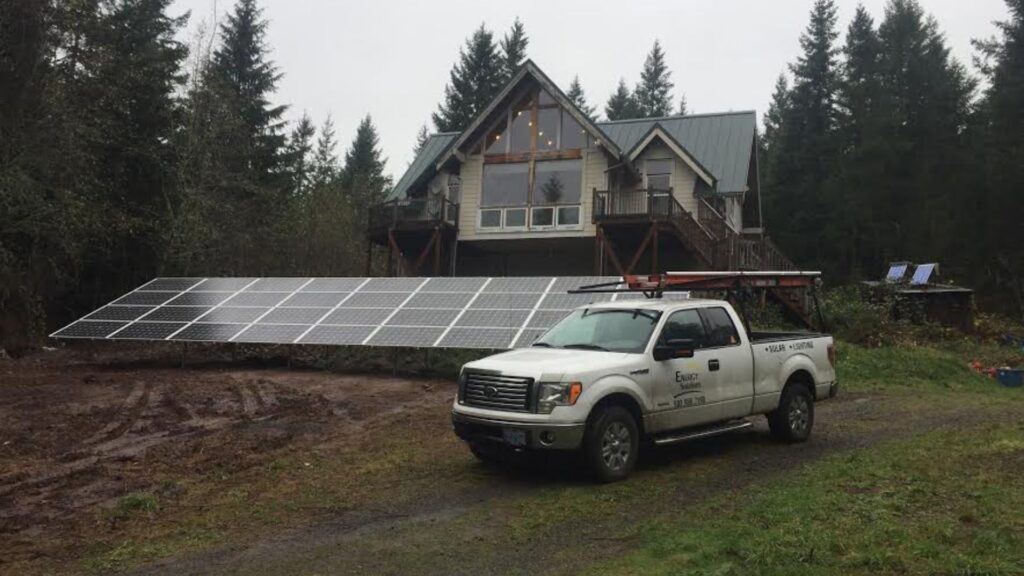
- Ground Mount Systems: If you have acreage in places like Beavercreek, Redland, or rural Clark County, a ground-mounted solar system is often the superior choice. What exactly is a ground mount? Instead of attaching racking to your shingles, we sink a heavy-duty, engineered steel frame directly into the earth in a sunny, open patch of your yard.
- Why they work beautifully: Ground mounts give our engineers total control. We can point the panels to perfect “True South” and set them to the exact optimal tilt angle to capture low winter sun in the Pacific Northwest. Furthermore, panels on the ground operate at cooler temperatures because of increased airflow beneath them (which actually boosts power production). Best of all, you never have to worry about replacing a roof underneath them, and wiping off spring pollen or winter snow is as easy as walking by with a soft push broom.
- The “Dual Split” System (Roof + Ground): What if you have a great south-facing roof, but it can only fit 10kW of panels, and you still need 20kW total? We can build a dual split system. We install half the array on your primary roof and the other half on a smaller ground mount in the yard (or on a detached shop/barn). Because our in-house licensed electricians utilize highly advanced, modular Enphase microinverter technology, these two physically separate arrays seamlessly tie back into your single main electrical panel as one unified power plant.
Net Energy Metering (NEM): The Good and The Catch
If you have an all-electric home and a massive 20kW array, you might be wondering how the seasons affect your power. In July, your 50 panels might produce 120 kWh in a single day—far more than you can use. But in a gloomy December, that production drops drastically just as your heat pump kicks into overdrive.
Think of the regional power grid (PGE, Pacific Power, or Clark Public Utilities) as a giant, invisible battery for your wallet. During our long, sunny summers, you send your massive excess power back into the grid. The utility company legally must give you a 1-for-1 retail credit for that energy. When winter arrives, you simply “cash in” those banked credits. You are effectively paying to heat your home in January using the sunshine you harvested in August.
The Drawback: Grid-Down Means Power-Down
Net Metering is incredibly useful financially, making solar a phenomenal investment even in the cloudy PNW. However, there is a major catch that door-to-door salesmen conveniently “forget” to mention: If you only have solar panels, your power will still go out during a neighborhood blackout.
Why? It’s a matter of life-saving safety. If an ice storm takes out a power line in Lake Oswego, utility workers have to climb those poles to repair them. If your 20kW solar array is still pumping high-voltage electricity backward into the broken grid, it could electrocute the linemen. By law, standard grid-tied solar inverters must instantly shut down the millisecond the grid goes offline.
So, without a battery, even on a brilliantly sunny day after a storm, a grid failure means your 50 panels will sit uselessly on your roof.
The Fix: Comprehensive Energy Independence
If losing power during our increasingly severe PNW winter storms is a concern, standard solar isn’t enough. You need true Energy Independence.
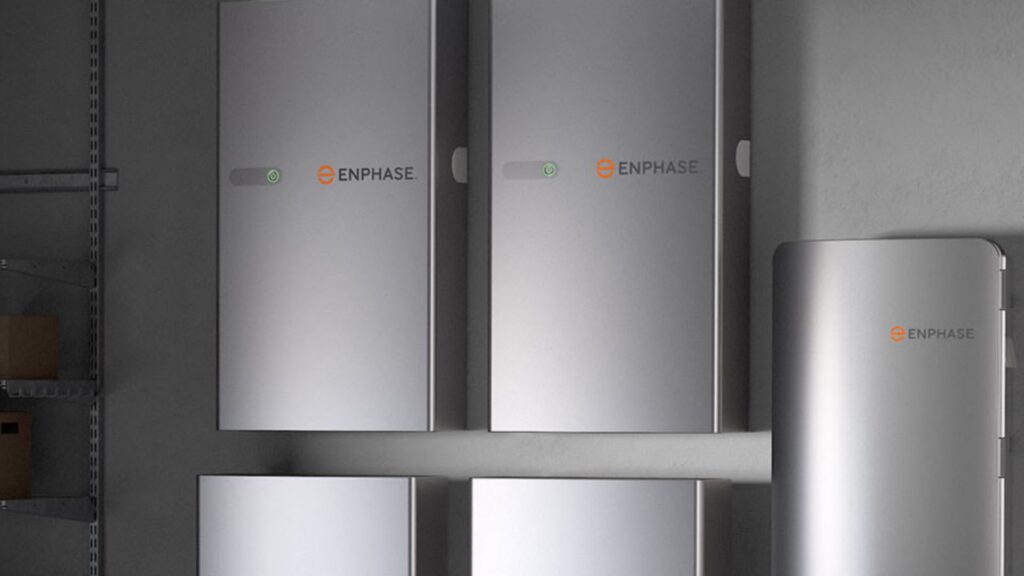
To keep your lights on, your heat pump running, and your EVs charging during a blackout, you must decouple from the grid using a Battery Backup system. When the grid fails, the battery’s smart switch instantly islands your home. Your 20kW array routes power directly into your battery, and your battery powers your home—completely safely, and completely off-grid.
Transform Your Home with our Signature Packages
Because we are licensed electrical contractors, we look at your home’s entire electrical ecosystem. Handling a 20kW system often requires pushing 80+ amps of current, which almost always necessitates electrical upgrades. Many homeowners choose to bundle services into one of our Signature Packages, saving thousands on long-term labor costs because our in-house licensed electricians and installers can handle everything in a single, streamlined project.
- The EV-Ready Home: We pair your new 20kW array with Level 2 EV Chargers and a necessary electrical panel upgrade.
- The Resilient Home: We install a high-capacity Generator alongside a manual transfer switch for guaranteed winter power.
- The Full Transformation: The ultimate ecosystem. We integrate Solar + Battery Backup + EV Chargers + a Smart Panel. You effectively become your own completely independent micro-utility.

A Quick Word on Roof Health
Installing 50 panels adds roughly 2,000 to 2,500 pounds of distributed weight to your roof. While Oregon framing is built for heavy snow loads and can easily support this, the roofing material must be in great condition. If your roof is nearing the end of its life, replace it before installing solar.
If you do need a re-roof a decade from now, we offer a dedicated Solar Support (R&R) service to safely Remove and Reinstall your array. We will coordinate with your roofer to protect your warranties, but always remember the golden rule: roofers are experts at roofing, not electricians. You absolutely need our in-house licensed electricians and installers to safely disconnect your live, high-voltage power plant and remount it to current codes once the new shingles are laid. Never let a roofer unbolt your solar array!
Frequently Asked Questions
Do I need to upgrade my electrical panel for a 20kW system?
Almost certainly. A 20kW system pushes a massive amount of current. Most standard 200-Amp main breaker panels simply cannot handle that load safely without modification. Our electricians will likely need to perform a “Line Side Tap” or a full panel upgrade to ensure your home remains safe and up to code.
Can I put panels on the north side of my roof to make space?
Generally, we strongly advise against it. In the Northern Hemisphere, north-facing roofs receive very little direct sunlight. While modern panels can capture diffuse ambient light, the production is often too low to justify your financial investment. We would recommend a ground mount or a highly efficient smaller system before utilizing a north-facing roof.
Will a 20kW system eliminate my electric bill entirely?
With Net Energy Metering, a properly sized 20kW system can absolutely drop your energy usage bill to a “Net Zero” over the course of a year. However, local utilities (like PGE or Pacific Power) still charge a small, mandatory monthly connection fee (usually around $12-$15) to remain hooked up to the grid.
Ready to Find Out Your True Potential?
Designing a 20kW system is a major construction and electrical engineering project. Don’t rely on online calculators that don’t understand Clackamas County fire codes or your neighborhood’s shading.
We don’t guess, and we don’t use high-pressure tactics. We analyze your past 12 months of energy usage, physically measure your property, and use advanced software to design a custom ecosystem tailored perfectly to your family’s high-power needs.
Get a Free Quote today and let our local experts design your path to Energy Independence!